Your garden is either going to hand you a massive bounty this year or leave you with a broken heart. The deciding factor is not your watering schedule, and it is not how much sun your raised beds get. The real difference is whether a pollinator shows up to your flowers. If you want to know how to attract pollinators and the other beneficial bugs that keep a garden alive, this is the post.
I have been growing food in my Atlanta yard since 2015, and this is the framework I use to pull bees and beneficial insects into my beds and keep them there. Stick with it to the end, because the final tip is the one that makes everything else work.
Why pollinators are the main event
You can do everything right, with perfect soil, perfect water, and perfect temperatures, and still get zero melons or squash if a bee never arrives. Without an insect physically moving pollen from flower to flower, your cucumbers, watermelons, and pumpkins will shrivel up, turn yellow, and rot on the vine.
Tomatoes and peppers can technically self-pollinate in the wind, but their flowers are built for bees. The pollen is locked inside, and it takes a bee landing on the flower and vibrating at the right frequency to shake it loose. That is called buzz pollination, and it can increase your tomato yield by 40%, with heavier and sweeter fruit. This is not just a backyard theory. The largest commercial greenhouse growers in the world truck in bees, because pollination is the one thing they cannot replicate artificially.
Unless you are growing wind-pollinated crops like wheat, corn, or rice, you are planting a garden for the good stuff. And the good stuff needs bees.
The truth about the predator army
Now let us talk about the other bugs everyone wants to buy: the predators. Ladybugs, green lacewings, and parasitic wasps are the bodyguards of the garden. They are great to have around, but here is a hard truth. If you are spending all your energy trying to recruit an army of predators, ask yourself why you need an army in the first place.
If you need an army, you have a big pest problem. And a big pest problem means your plants are stressed. Pests do not attack randomly. Stressed plants give off chemical signals that bad bugs smell from far away, and they home in on the weakest, sickest plants in your yard. Think about how lions hunt. They do not chase the strongest zebra, they go for the weak and vulnerable. If you are constantly battling pests, your garden is waving a red flag.
How to attract the good bugs: smell and color
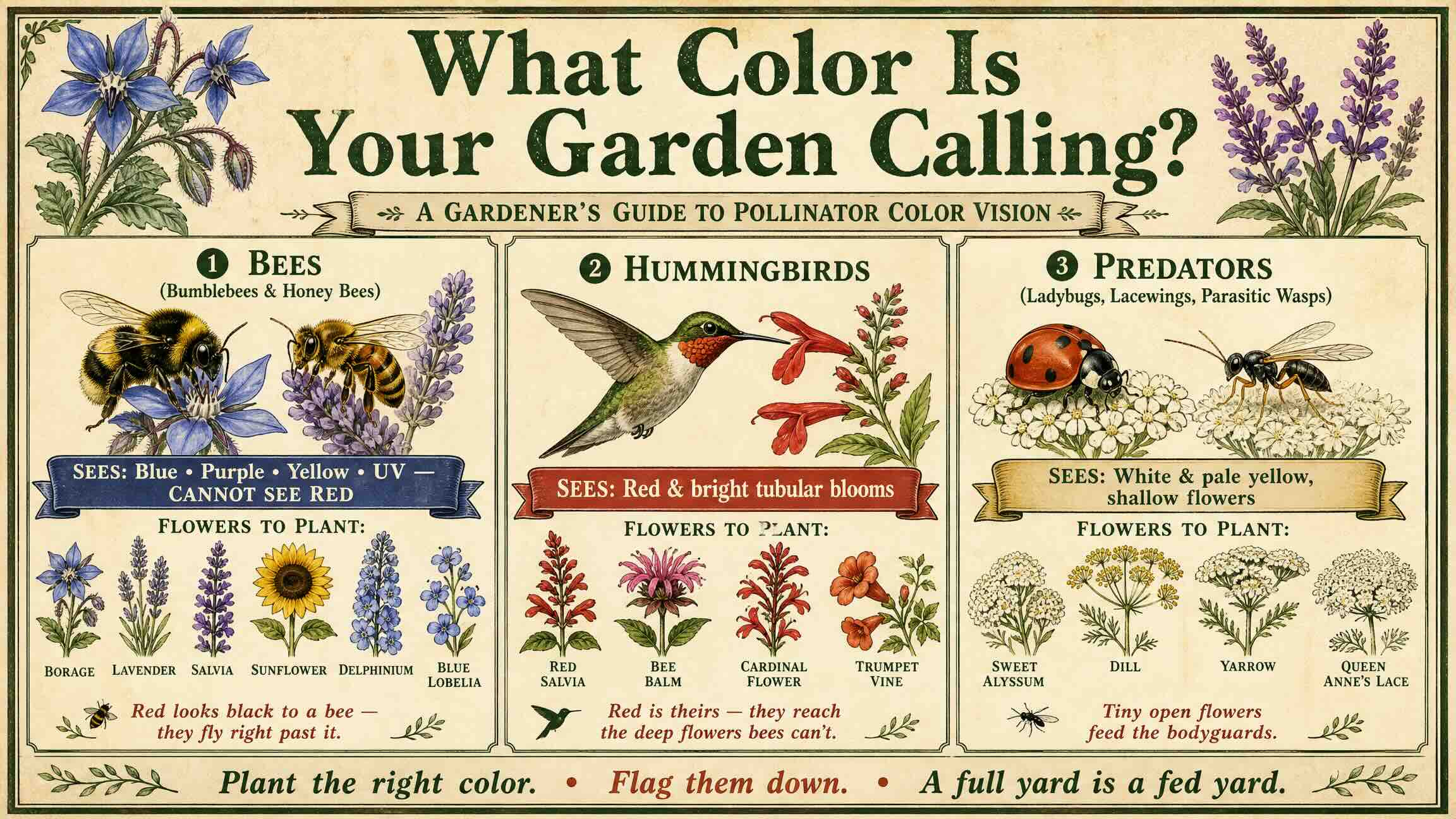
To bring in pollinators and predators naturally, you have to understand how they find a flower. It comes down to two steps. Smell brings them into the neighborhood, and color shows them exactly where to land.
Smell brings them in. A honeybee has a sense of smell about 100 times more powerful than yours and can find a flower from over a mile away. Strongly scented herbs act like a giant neon "open" sign in the sky. Let herbs like dill, fennel, cilantro, parsley, mint, lemon balm, oregano, and basil go to flower and they will pull beneficial bugs in hard. As a bonus, those strong scents confuse the bad bugs trying to sniff out your vegetables.
Color lands them. Once they are close, color takes over. Here is the secret: bees cannot see red. It just looks black to them. Bees see into the ultraviolet range, so they hunt for blue, purple, and yellow flowers. Plant borage, salvia, lavender, and sunflowers for pure bee fuel. Hummingbirds, on the other hand, see red perfectly and dive for deep, tubular red flowers. Your predators, the ladybugs, lacewings, and wasps, prefer small white and pale yellow flowers.
Match the mouth to the flower shape
Smell and color get bugs to your yard, but the physical shape of the flower decides whether they can actually eat. Every bug has a different mouthpart. Match the mouth to the flower shape and you will see results fast.
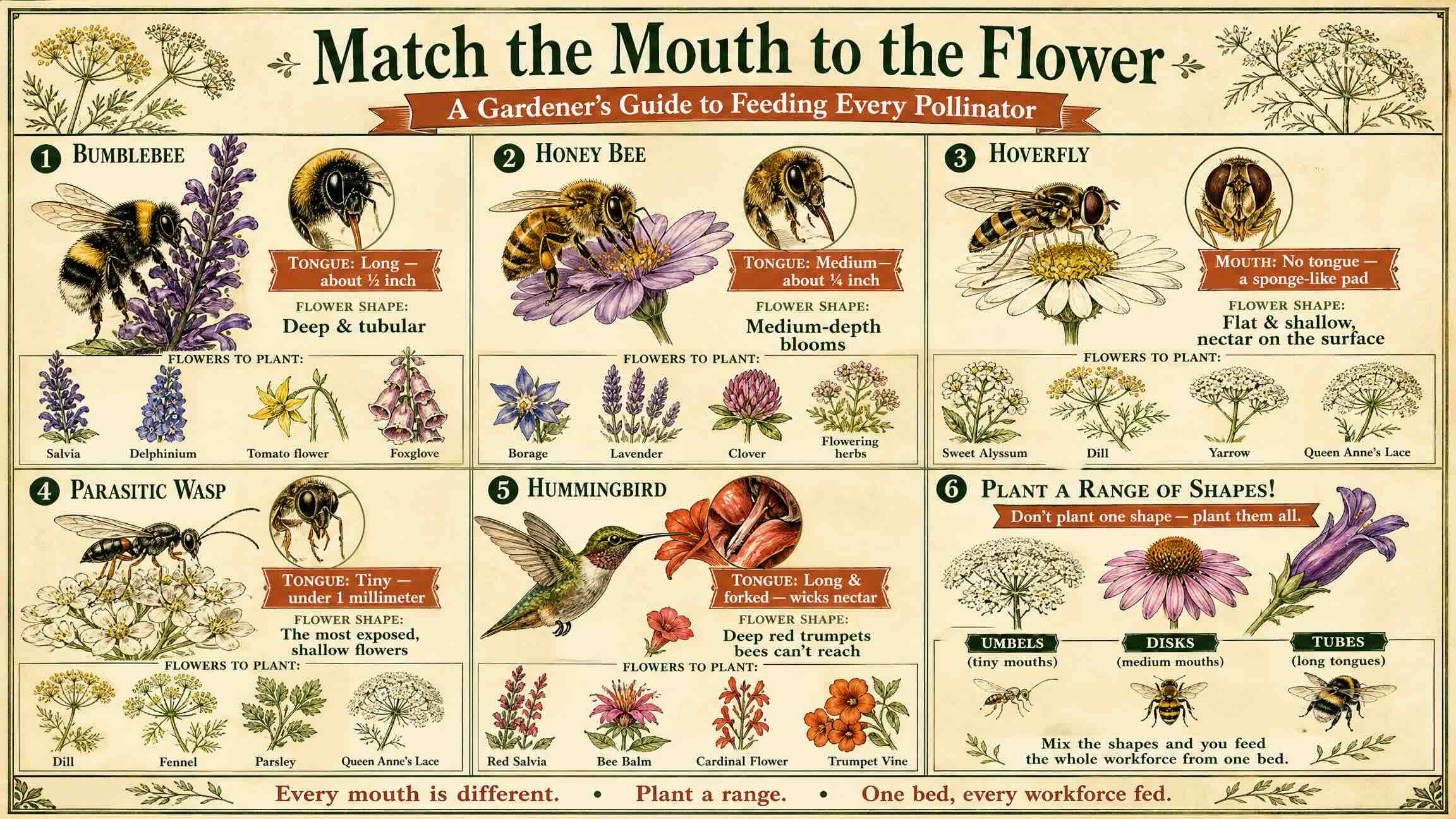
As the guide above shows, you want a range of shapes in your beds:
- Tiny clustered umbels (dill, fennel, Queen Anne's lace) for the tiny-mouthed wasps and hoverflies.
- Disc flowers (sunflowers, zinnias) for the medium-mouthed bees.
- Tubular flowers (bee balm, trumpet vine) for the long-tongued bumblebees and hummingbirds.
Keep something blooming all year
A big mistake gardeners make is planting only summer blooms. Beneficial bugs come out of hibernation in March and try to fatten back up in October and November. If your garden only blooms in July, you are starving them exactly when they need you most.
Walk your garden once a month. If nothing is blooming, you have a gap to fill. Here is how I cover the whole calendar.
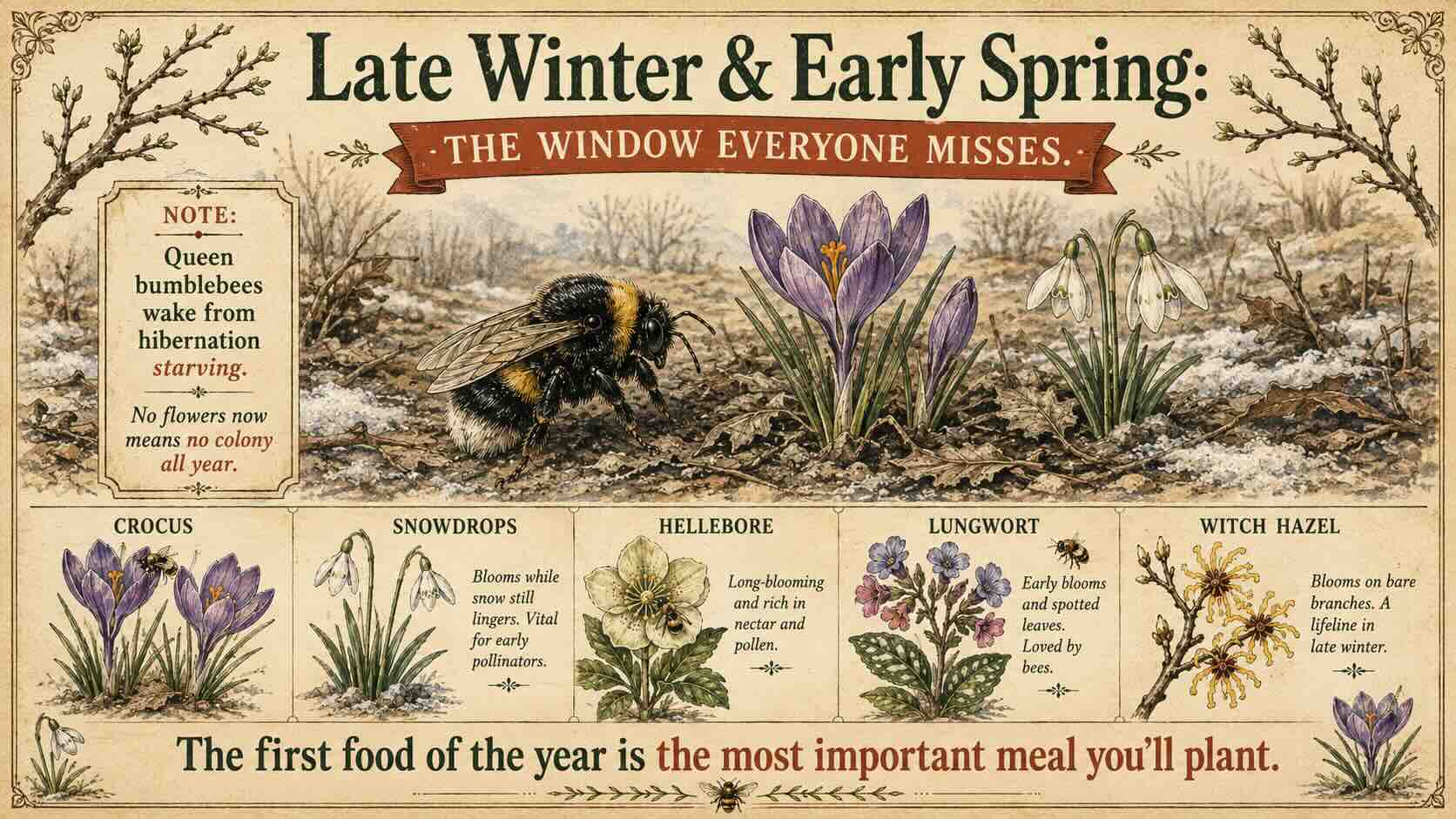
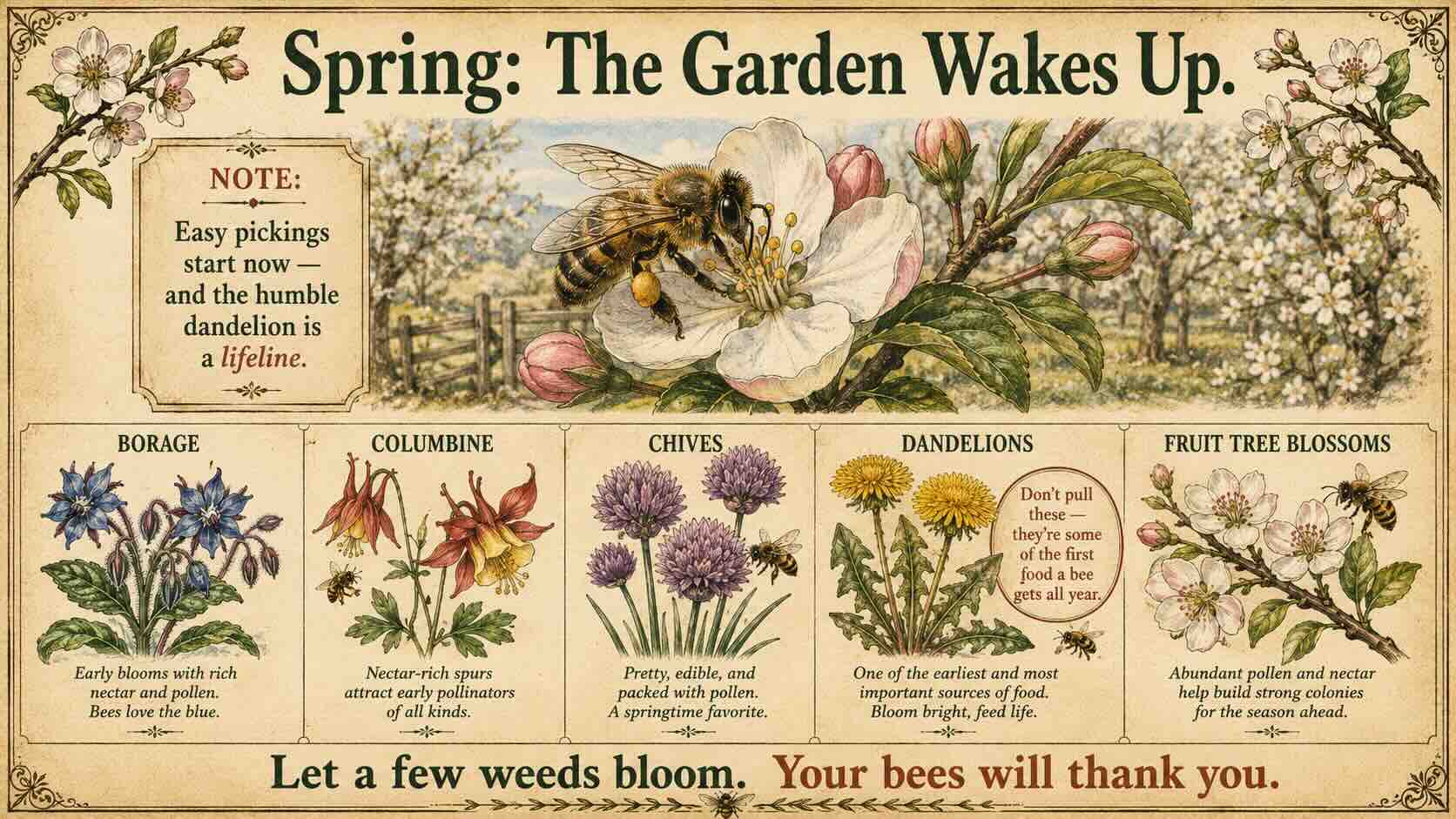
Late winter and early spring: the first meal. When queen bumblebees wake up in February or March, they are ravenous, and no flowers now means no colony all year. Dandelions are a lifeline in this window, so do not pull them.
Spring: the garden wakes up. As spring fills in, add easy pickings like borage, columbine, chives, and fruit tree blossoms.
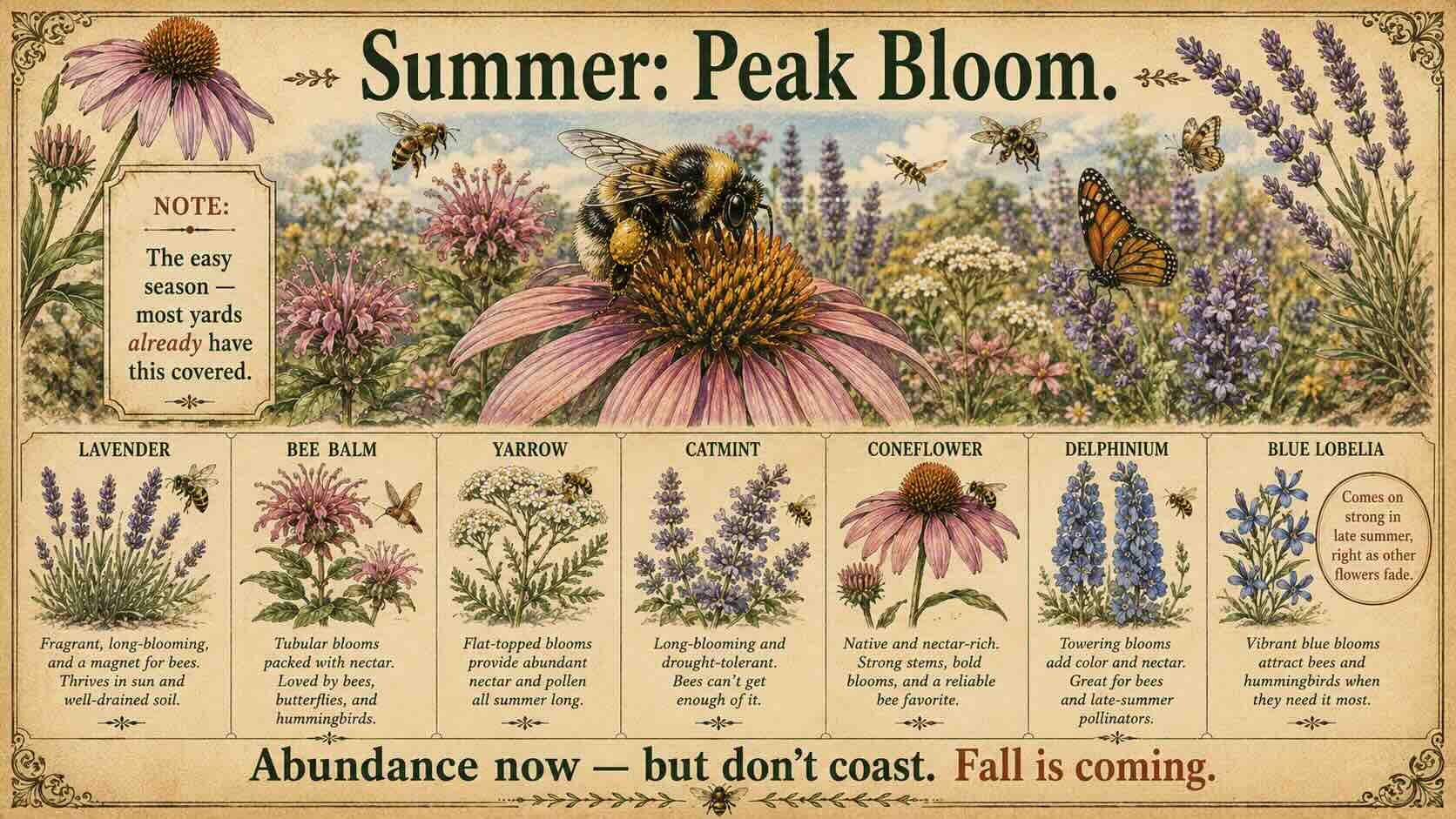
Summer: peak bloom. This is the easy season, and most yards already have it covered. Do not coast, because fall is coming.
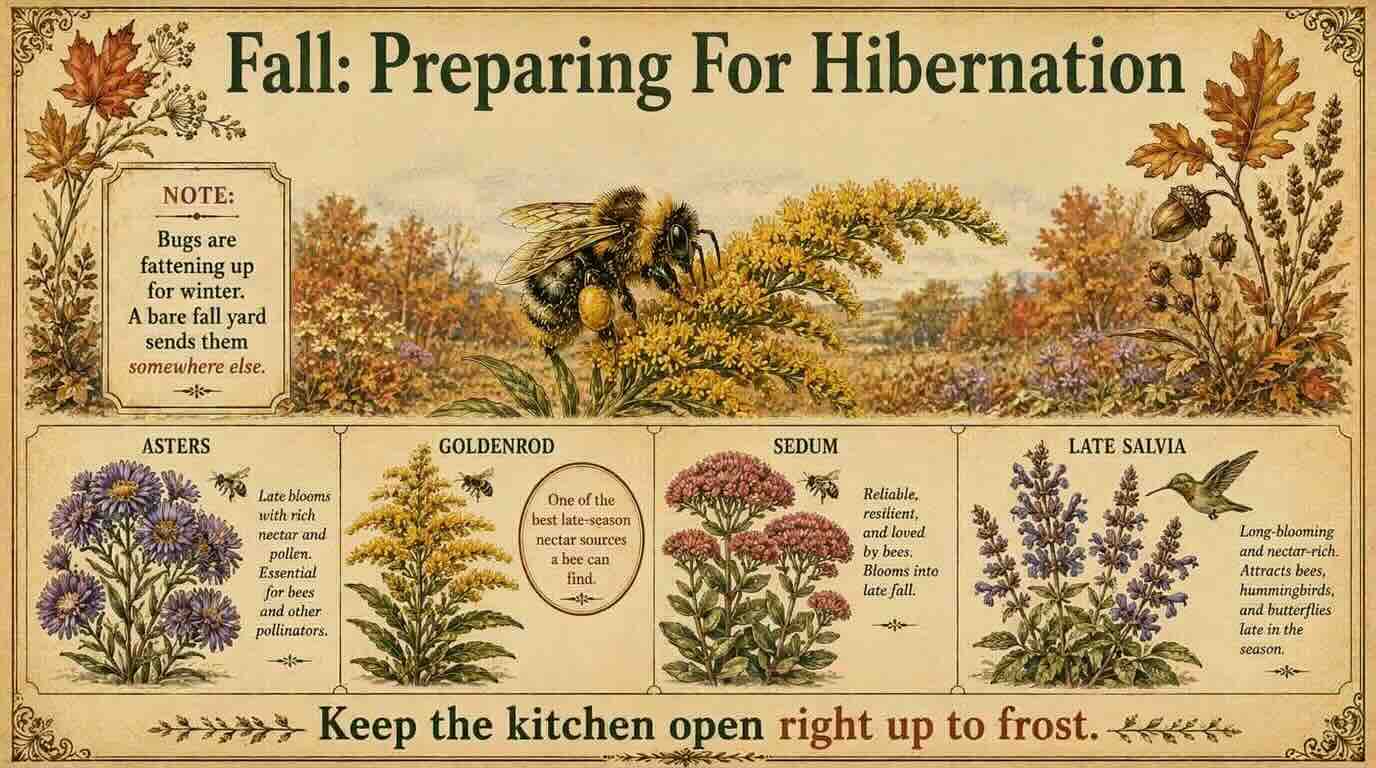
Fall: the window everyone misses. Almost everyone skips fall blooms and sends the bugs to a neighbor's yard instead of letting them fatten up before winter. Goldenrod carries the whole yard here, with asters, sedum, and late salvia backing it up.
The real assassins are the babies
When it comes to predators, the adults are not the monsters. Their babies are. Adult ladybugs, green lacewings, hoverflies, and parasitic wasps mostly drink nectar. They lay their eggs near your pests, and the larvae that hatch, the ugly alligator-like grubs, the "aphid lions," and the wasp grubs that eat pests from the inside out, are your real garden assassins. So the strategy is simple: feed the adults nectar so they stick around and lay eggs.
Water, shelter, and patience
Bugs need more than food. Bees need a shallow saucer filled with pebbles and water so they can drink without drowning. They also need a home. Stop aggressively raking your beds in the fall. Leave the leaves and dead stems through the winter, because a clean bed is a dead bed. When you bag up that leaf litter in November, you are throwing your overwintering ladybugs and lacewings in the trash.
Finally, give it time. Bugs establish a daily route, almost like a trap line. If you are a new gardener, it can take a full season for the local insects to map your yard and add you to their rounds. Be patient, and go easy on the sprays. Broad-spectrum pesticides and even neem oil can wipe out soft-bodied beneficial larvae along with the pests, so save them for a real outbreak. If you do reach for neem, spot-treat only the affected plant in the evening after the pollinators have gone home, rather than spraying the whole garden.
The ultimate secret: fix your soil
Here is the final tip that ties it all together. All the flowers, water, and shelter in the world will not save you if your soil is dead.
If you are constantly battling pests, your plants are stressed, and 99% of the time that stress traces straight back to poor soil. Pests literally cannot digest the complex sugars of a truly healthy plant. Fix your soil and you build robust plants that are practically invisible to pests. I grow chemical-free, using raised beds and backyard compost, and I focus on feeding the soil biology instead of pumping in synthetic fertilizer. Do that and you remove the stress signals that call the pests in to begin with.
Key takeaways
- Pollinators, not sun or water, are the factor that decides whether fruiting crops set. Buzz pollination alone can lift tomato yield by 40%.
- Needing an army of predators is a warning sign. It means your plants are stressed and attracting pests.
- Smell brings bugs to your yard and color lands them. Bees see blue, purple, and yellow but not red. Hummingbirds want red tubular blooms. Predators want small white flowers.
- Match flower shapes to mouthparts: umbels for tiny wasps and hoverflies, disc flowers for bees, tubular flowers for bumblebees and hummingbirds.
- Keep something blooming from late winter to fall. The first and last meals of the year matter most, and most gardens miss them.
- Leave the leaves, skip broad-spectrum sprays, and above all fix your soil, because healthy plants stop sending the stress signals that draw pests.
Feed the soil, plant the right flowers, leave the leaves, and the good bugs will move in and stay. Watch the full walk-through in the video above, and join the newsletter below for weekly growing guides and real data from my Atlanta yard.