If you are waiting for that perfect, deep red orb to appear on the vine before you pick, you are harvesting your tomatoes too late, and it is quietly costing you your crop. Knowing when to pick tomatoes is one of the highest-leverage skills in the garden, and it comes down to a single moment called the break point.
I have been growing food in my Atlanta yard since 2015, and I have watched more good tomatoes get ruined in the last week on the vine than at any other point in the season. Here is the science of why you should harvest earlier, how the weather is actively wrecking your flavor, and the pests waiting to steal what you worked months to grow.
Understanding the break point
According to the USDA, a tomato hits its break point when its color changes by just 10 percent. It usually shows up as a faint blush of pink or yellow at the blossom end of the fruit.
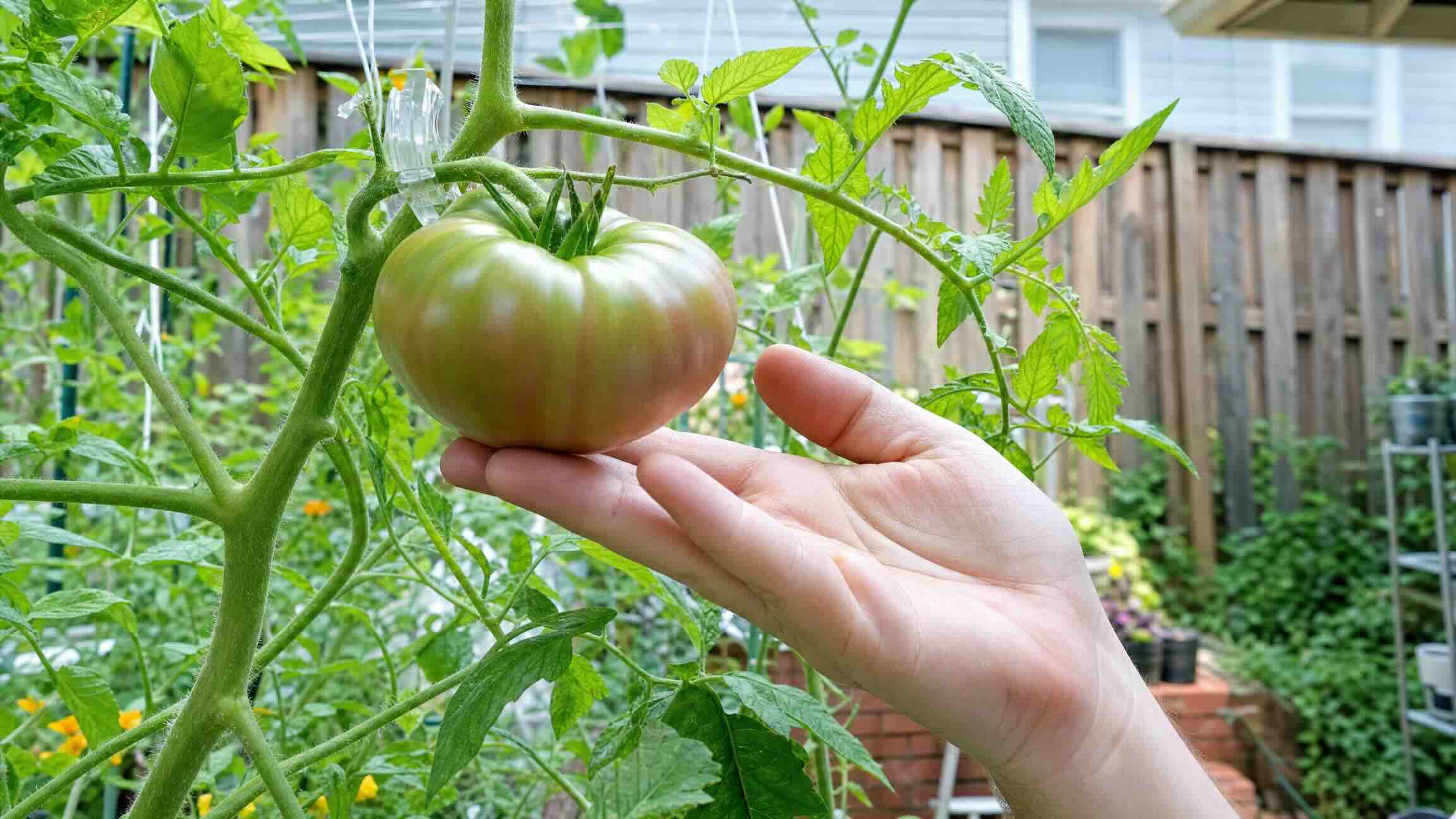
At that 10 percent mark, something important happens. The tomato effectively seals itself off from the main plant. It stops taking in nutrients through the stem, and from that moment on it is entirely self-ripening. Leaving it on the vine past the break point does nothing to increase its nutritional value, and it does not make it any more organic. All you are doing is exposing it to the elements, to unpredictable weather, and to hungry wildlife.
When a tomato is at the break point, give it a gentle twist. The plant should not fight you, it should pop right off. Bring it inside, set it on the kitchen counter, and let it finish ripening safely in a controlled environment.
The danger of the rain split
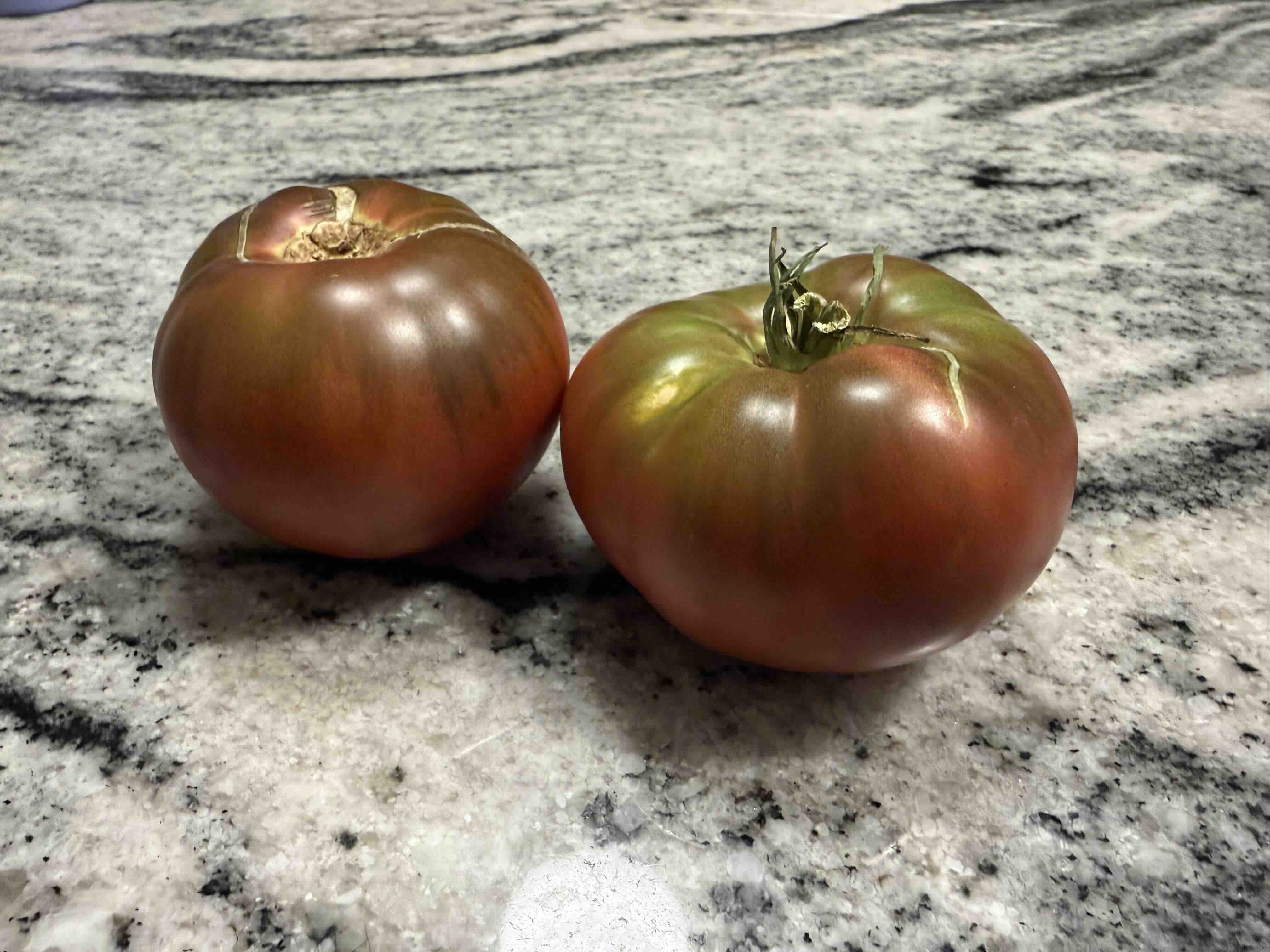
If you ignore the break point, you are gambling with the weather. I recently left a Cherokee Purple on the vine for well over a week past its break point. I got busy around the Fourth of July and delayed picking it. Then a massive rainstorm rolled through.
When a tomato plant takes up a big influx of water from heavy rain, it pumps that water straight into the fruit. If the tomato is already at or past its break point, the flesh inside expands incredibly fast, faster than the skin can stretch to keep up. The result is a skin that violently splits open.
You can technically still eat a split tomato, but it is permanently damaged. That open wound is an instant entry point for fungus, rot, and insects. A tomato that could have ripened perfectly on your counter is now a ticking time bomb of disease.
Heat stress and the flavor drain
If the rain does not get your harvest, the heat will. Down here in Atlanta, we recently pushed through a brutal heat wave with the heat index climbing to a suffocating 113 degrees.
For a tomato plant, anything over 85 degrees brings on serious heat stress. When the fruit bakes at those temperatures, its internal chemistry flips. The natural sugars that give a homegrown tomato its sweetness start to plummet, while the acid levels sharply spike, and the whole flavor profile changes. You can spend months growing a beautiful heirloom, then have it taste sour and watery simply because it sat in the sun for an extra week.
The pigment problem: lycopene versus carotene
During a big heat wave, you may notice your tomatoes refuse to turn red and go a yellowish-orange instead. That comes down to two pigments:
- Carotene gives the tomato its yellow and orange color.
- Lycopene is the compound responsible for that classic deep red.
Lycopene is extremely sensitive to high temperatures. Once the heat reaches extreme levels, the plant physically stops producing it. The carotene stays behind, and you are left with a yellow tomato. The color change itself is cosmetic and does not change the taste on its own, but it is a glaring signal that the plant is under heat stress. If your tomatoes are staying yellow in the dead of summer, the sugars have already dropped and the acids have already spiked.
Defending the harvest from squirrels
Leaving ripe, red fruit dangling outside is a neon sign for local wildlife. If you do not pick your tomatoes at the break point, the squirrels will.
I have been testing deterrents for my potted setups to keep them off. I started with some green ones, but they rusted out fast and ended up looking like a bunch of Kermit the Frogs scattered around the garden. I have since upgraded to a setup using copper rods paired with brass bells. The copper blends right into the foliage, covers far more surface area, and holds up to the weather. So far the bells are working perfectly and nothing is touching the pots.
The 24-hour surprise: the tomato hornworm
It is not just mammals you have to worry about. Just 24 hours after I harvested a tomato at its break point, I walked past that same plant and spotted tiny specks of frass, which is bug poop, on the leaves. I zoomed in, and sitting right there, camouflaged perfectly against the green stem, was a tomato hornworm.
These guys are voracious. They can strip a plant bare in a couple of days. If I had left that tomato on the vine for one more day, that hornworm would almost certainly have found it and ruined it.
Because I grow chemical-free using raised beds and backyard compost, I do not reach for broad-spectrum sprays. I picked the sticky little guy off by hand and relocated him to another part of the yard. Do not worry, the horn on their back is just for show, they do not sting.
Key takeaways
- A tomato reaches its break point at about 10 percent color change, a blush of pink or yellow at the blossom end.
- At the break point the fruit seals off from the plant and ripens on its own, so leaving it out adds no nutrition, only risk.
- Pick at the break point with a gentle twist and finish ripening on the counter, safe from weather and wildlife.
- Heavy rain on an over-ripe tomato causes the skin to split, opening the door to rot and insects.
- Heat over 85 degrees drops the sugars and spikes the acids. Yellow tomatoes in high heat are a symptom of that stress, since lycopene stops forming.
- Ripe fruit on the vine invites squirrels and hornworms, so harvest early and check for frass daily.
Mother Nature is unpredictable, and the garden is full of hungry competitors. Stop leaving your tomatoes on the vine to bake, split, and get eaten. Harvest at the 10 percent break point, ripen them safely indoors, and you keep the flavor you worked so hard to grow. Watch the full walk-through in the video above, and join the newsletter below for weekly growing guides and real data from my Atlanta yard.